
 Deutsch
 English
Geoenergy systems
Research platform at TEN.efzn
What exactly is geoenergy? What role does it play in the transformation of the energy system? And what do the scientists at the TEN.efzn Geoenergy Systems Research Platform have to do with it?
Coordinator Dr.-Ing. Birger Hagemann has the answers: “At the Geoenergy Systems research platform, we’re exploring how the geological subsurface can be effectively utilized for the energy transition. This primarily involves energy storage, but also energy generation.”
Energy storage focuses on gas and heat storage. Energy generation centers on geothermal energy—particularly when combined with heat pumps and solar thermal energy, that is, the thermal utilization of solar radiation to generate heat energy.
Because the geological subsurface offers great opportunities for the energy transition, but projects in this area are very expensive, the researchers are also addressing the question of how these projects can be planned efficiently despite all the uncertainties—and, above all, how risks can be minimized.
Spokesperson Prof. Dr. Leonhard Ganzer of Clausthal University of Technology describes the goal of the Geoenergy Systems research platform within TEN.efzn as follows: “With the Geoenergy Systems platform as part of TEN.efzn, we want to demonstrate the potential that the geological subsurface offers for the energy system of the future—from deep geothermal energy to hydrogen storage. Our goal is not only to explore these opportunities scientifically but also to actively share them with society.”
Prof. Dr. Insa Neuweiler of Leibniz University Hannover, who is also the spokesperson for the research platform, further emphasizes: “In the Geoenergy Systems research platform, we aim to systematically account for the uncertainty in subsurface conditions when developing models and making model predictions. This is intended to improve transparency in decision-making processes.”
Lower Saxony: ideal for geoenergy research
What makes Lower Saxony in particular ideal for research on geoenergy systems? For one thing, the geological conditions typical of this state: there are porous sandstone formations and salt domes with very well-explored georeservoirs that are suitable for storage. Furthermore, temperatures underground are comparatively high. This geothermal energy is of interest not only for scientific research but also for practical geothermal applications.
Furthermore, Lower Saxony is already making intensive use of the potential lying beneath its surface: not only is Germany’s largest natural gas production located here—the state also has the most extensive experience nationwide in the operation and management of numerous natural gas and crude oil storage facilities.
This intensive use is also associated with the highest number of deep boreholes in Germany. Where there is extensive and deep drilling, there is also a broad database. This is because all wells must be reported to the responsible state geological office, and those deeper than 100 meters must also be reported to the responsible mining authority. And this database, in turn, reveals a great deal about what lies beneath the Earth’s surface. The TEN.efzn researchers benefit greatly from this.
This is where data from boreholes is archived
The Lower Saxony Drilling Database contains drilling results from 150 years of geological exploration. It provides information on more than 468,000 boreholes, with approximately 3.4 million data records on the individual strata encountered during drilling. The longest boreholes extend over 9,000 meters.
The majority of the data comes from hydrogeological and geotechnical exploration boreholes, most of which are less than 100 meters deep. Drilling data from the oil and natural gas industry are documented with their master data records; however, the stratigraphic logs are stored separately in the hydrocarbon database of the State Office for Mining, Energy, and Geology.
The topic of underground storage is also ubiquitous: more than 50 percent of the natural gas stored nationwide is held in storage facilities in Lower Saxony. Within the European Union, Germany has the largest natural gas storage capacities. Across approximately 40 storage facilities, the total capacity is about 261 terawatt-hours. By way of comparison, this amounts to about 20 percent of annual national gas consumption.
Laying the technical and methodological foundations for innovative projects
“In the Geoenergy Systems research platform, we aim to build on this comparatively robust data set and experience to develop methods that enable a more accurate assessment of the geological subsurface’s potential for storage and geothermal energy generation,” says Insa Neuweiler.
Leonhard Ganzer emphasizes the direct added value for Lower Saxony: “Through our work, we are laying the technical and methodological foundations so that industrial companies in Lower Saxony can implement innovative geoenergy and hydrogen storage projects right here on site.”
From natural gas to hydrogen: what does this mean for storage facilities?
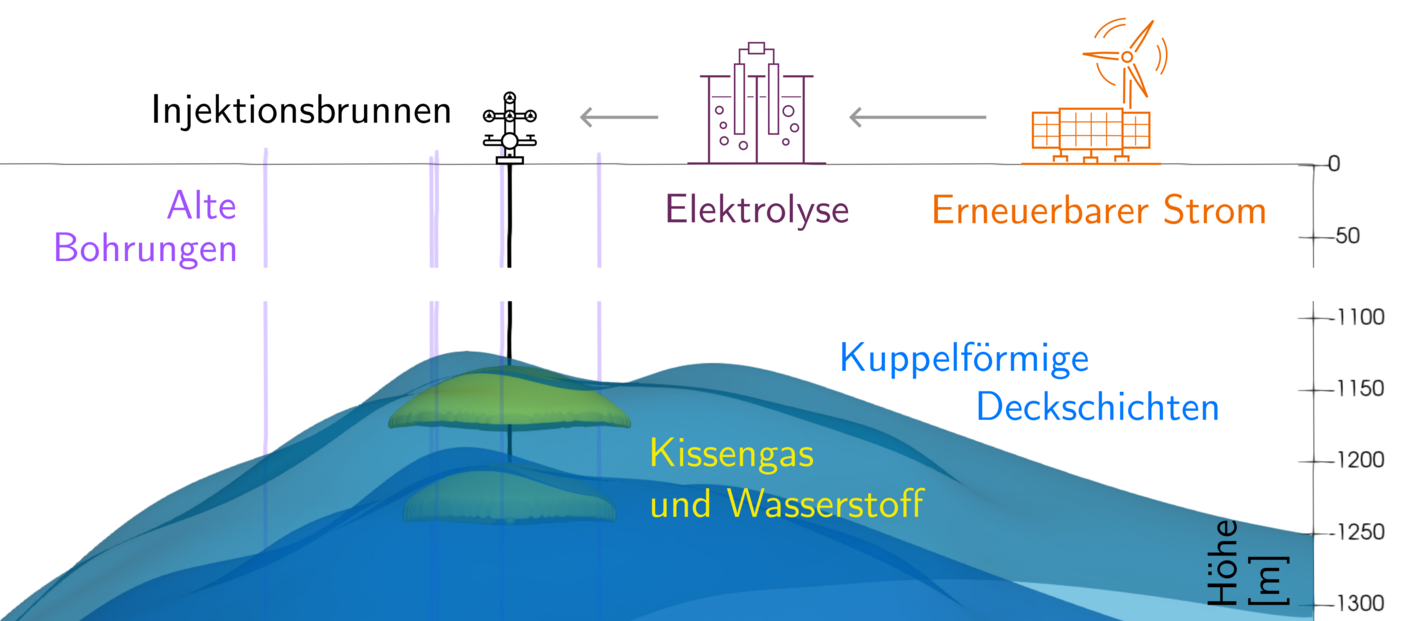
To meet climate goals, we must increasingly replace fossil fuels, such as natural gas, with renewable energy sources. Storage facilities previously used for natural gas could then be converted to store hydrogen—a key element of the energy transition. New storage facilities could also be built.
These storage facilities would then serve purely as energy storage: if there is more energy in the grid than is being consumed, it can be used in power-to-gas technologies to produce hydrogen, which is then stored. When the energy is needed, it is retrieved from underground. The idea behind power-to-gas: electricity is converted into storable gas, such as hydrogen, as needed. This way, the energy remains usable in the form of gas. That sounds quite simple. But in reality, it isn’t.
That is why the “Reuse and gas storage” innovation area is conducting detailed research into the fundamentals of this type of storage. After all, hydrogen differs significantly from natural gas in its properties. Above all, it is much more reactive. It is therefore necessary to investigate which biochemical or geochemical reactions might potentially occur underground.
Another difference lies in the size of the molecules. Hydrogen molecules are significantly smaller than natural gas molecules. The risk of leakage—that is, the danger that gas will unintentionally escape from the underground storage facility through the surrounding or overlying rock layers, as well as in the vicinity of the wellbore—is therefore greater than with natural gas.
In addition, repeatedly injecting gas and heat at different times affects the storage facility’s material. The associated frequent stress cycles could lead to fatigue or even cracking. Researching all of these factors ensures the highest possible level of safety during the operation of such storage facilities.
“With our platform, we are providing strong impetus for the development of the geological subsurface as a storage site for hydrogen—in Lower Saxony and worldwide,” emphasizes Leonhard Ganzer.
Storage in cavern and porous rock storage facilities
In Lower Saxony, there are two different types of underground gas storage facilities: cavern storage and pore storage. Caverns are large, artificially created cavities in underground salt formations. The surrounding salt seals the storage facility so that the stored natural gas cannot escape. The salt formations required for cavern storage are found primarily in northern Germany.
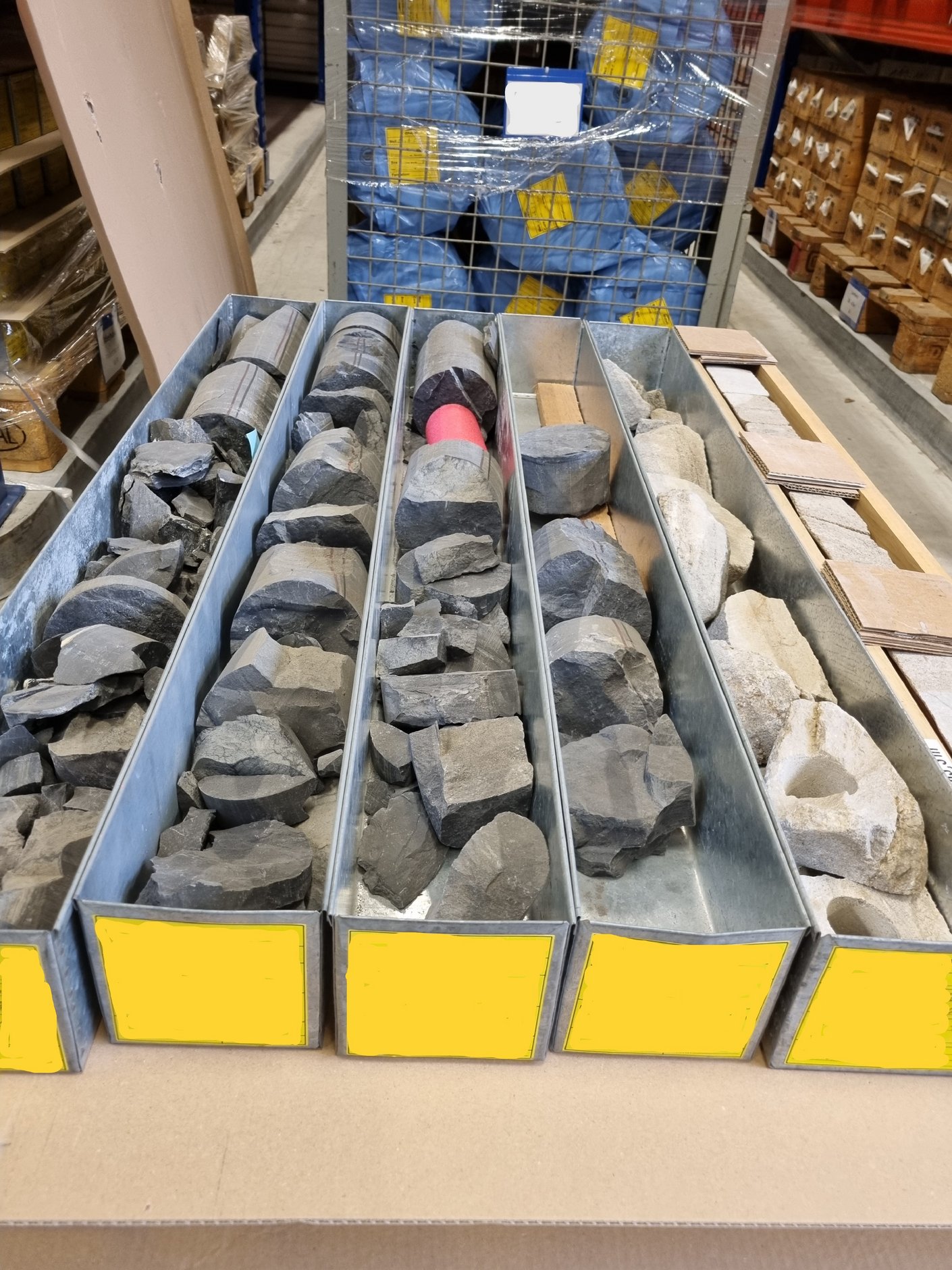
Porous storage facilities are created in natural reservoirs such as former gas fields. The rock there—such as sandstone—is porous and therefore suitable for storing gas. To do this, the gas is injected under high pressure into the tiny pores of the rock layer, which are barely visible to the naked eye.
You can think of it as a sturdy sponge. Porous storage facilities are sealed at the top by thick cap rocks, consisting mainly of clay and salt. Below the gas-permeable rock layers, an aquifer limits the storage area. Natural gas storage facilities are currently designed for a service life of about 50 years.
The Geoenergy Lab Burgwedel
The scientists at TEN.efzn are therefore working to fill gaps in research and develop models that enable concrete predictions in advance. This work is based at a specific location: the Geoenergy Lab Burgwedel.
The Burgwedel site is particularly well-suited because several research projects—such as GeoTWIN and GeoTES on heat storage—have been underway there since 2018. In addition to gas storage options, a case study in the “Geothermal energy and heat storage” innovation area will also explore the potential of heat storage and geothermal energy—particularly in combination with solar thermal energy and large-scale high-temperature heat pumps.
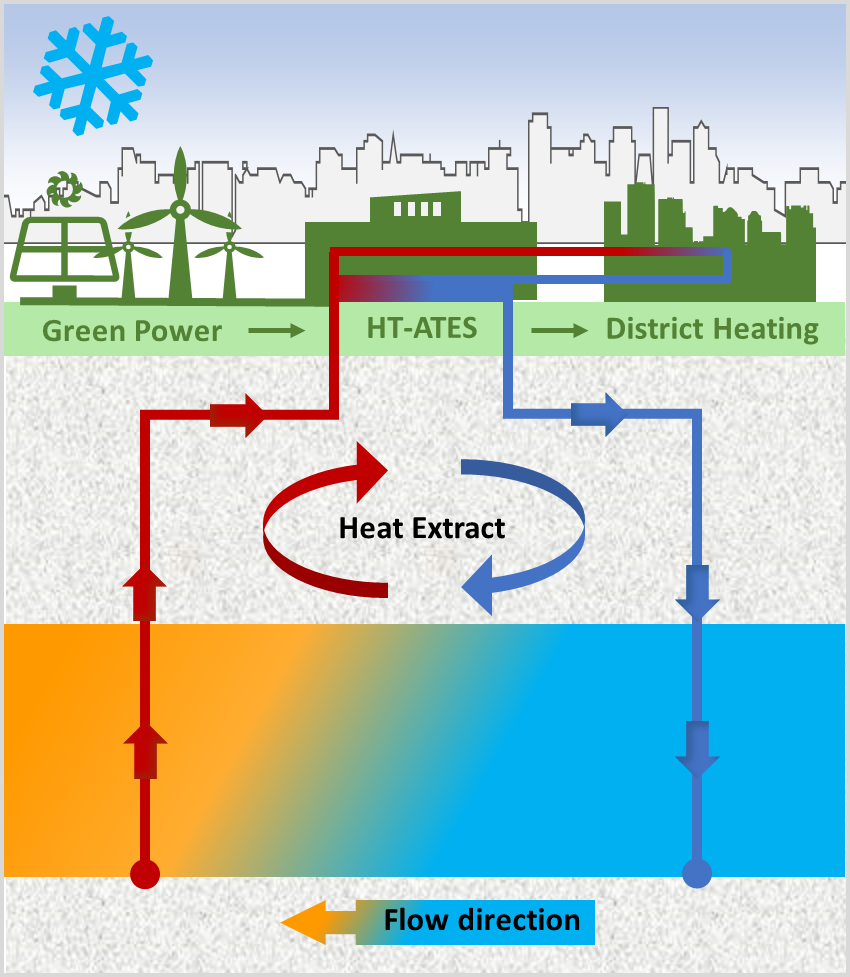
The advantage of underground heat storage is that excess heat in the summer is not lost. It is transported underground with water and stored there. It can then be used in the winter.
The socio-technical approach is also an integral part of this research platform. On the contrary. The demonstrated potential of geothermal energy could supply up to 1,800 residents in Burgwedel with climate-friendly heat from a depth of 1,200 to 1,400 meters via a local heating network starting in 2028. The hospital, school complex, and outdoor swimming pool are also located within the planned service area.
Project partners for the practical implementation include the municipality as well as local and regional energy partners. The TEN.efzn researchers will support this process from the very beginning, with a focus on citizen engagement and local acceptance.
“The networking of research platforms is an integral part of TEN.efzn because we can only realize the great potential by working together—through the close integration of our Geoenergy Systems platform with the thematic areas of heat, hydrogen derivatives, and the social dynamics of our energy transition,” explains Leonhard Ganzer.
Insa Neuweiler emphasizes just how important it is for research to incorporate perspectives from outside the scientific community: “Through dialogue with project partners from the social sciences, we want to incorporate citizens’ perspectives into risk assessments.”
The networking of research platforms is an integral part of TEN.efzn because we can only realize the great potential by working together—through the close integration of our Geoenergy Systems platform with the thematic areas of heat, hydrogen derivatives, and the social dynamics of our energy transition.
Geothermal energy: a key role in the heat transition
Why is geothermal energy so important? As a renewable heat source, it is an indispensable component of the heating transition. By 2030, the amount of geothermal energy fed into heating networks throughout Germany is set to increase tenfold.
However, geothermal energy at great depths—that is, below 2,000 meters—cannot meet this demand. Although the necessary technology exists, the investment costs are very high. Furthermore, there is a risk that a geothermal reservoir may not meet the required quality or quantity standards.
The situation is different for near-surface and medium-depth geothermal energy, such as in Burgwedel. Especially when combined with heat pumps and solar thermal systems, it can play a key role. This is because, compared to geothermal energy from deeper layers, it is significantly more affordable and involves less risk to extract. It can therefore be fed into local and district heating systems at a relatively low cost. Furthermore, when used in conjunction with thermal storage, the geological subsurface is utilized much more efficiently.
“We expect these systems to offer major advantages and would therefore like to assess their potential in Lower Saxony,” Insa Neuweiler explains.
Basic research is integrated with practical applications and technology transfer within the TEN.efzn research platform for geothermal energy systems. This also involves ensuring the transferability of the results to other locations. The potential of geothermal energy is therefore not only being investigated in an interdisciplinary manner but also quantified on a large scale so that it can be made available via web-based interactive maps.
What exactly do these maps do? With their help, a combined geothermal-solar heat supply can be characterized and simulated at locations where there is a need for it. This is done in conjunction with the assessment of seasonal heat demand in various rock formations typical of Lower Saxony, including salt deposits.
As already mentioned, the Geoenergy Lab Burgwedel serves as the starting point. The data collected there is supplemented with data from other geologically and socially representative locations where field research is conducted in collaboration with the TEN.efzn research platform “Social Dynamics.”
Shared-earth model
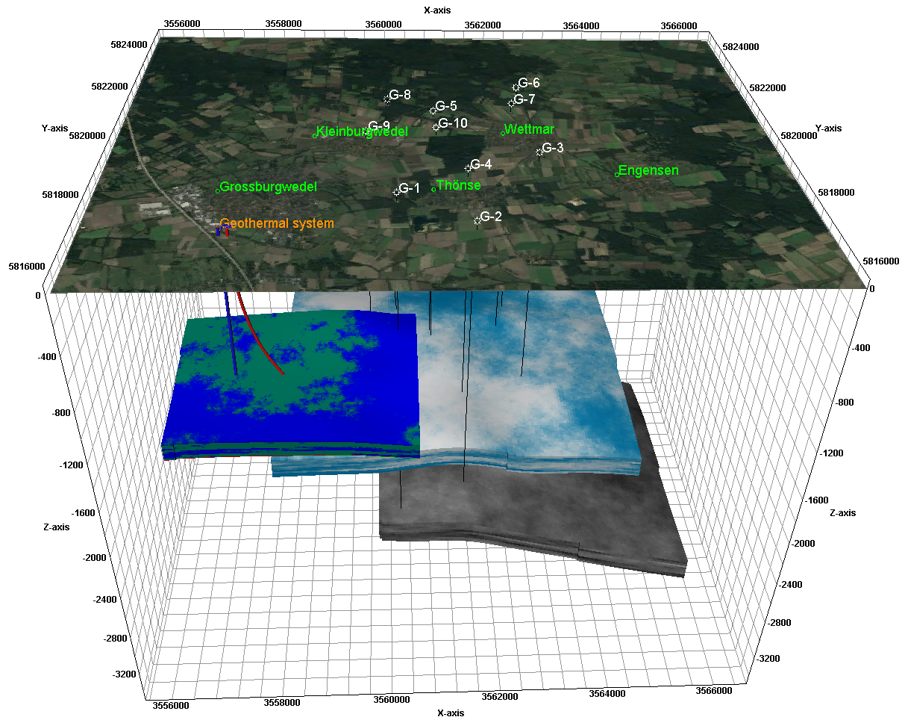
A so-called shared-earth model ensures that all scientists at the various locations can collaborate across disciplines—thereby developing exemplary approaches to the technical feasibility, optimization, and potential of gas and heat storage as well as geothermal utilization.
This is a 3D model that depicts the geological subsurface: it shows the spatial distribution of the individual rock layers as well as their porosity—that is, the extent of the voids present in the rock. It also incorporates data on permeability—that is, how easily gas or water can flow through the rock layers.
The model is based on data already available from the Geoenergy Lab Burgwedel. This data comes from seismic surveys, deep drilling, borehole measurements, geology, petrophysics, and core analysis—that is, the analysis of drill cores. As part of the TEN.efzn project, this model is continuously being expanded with additional data and thus improved.
This allows, for example, simulations of gas or heat storage to be carried out. Different scenarios can be incorporated, parameters can be adjusted, and the best-case, worst-case, and most likely scenarios can thus be determined.
“We are creating practical training programs so that the knowledge gained from research on deep geothermal energy and underground storage can be applied in business and society,” says Leonhard Ganzer.
Risk assessment: models and simulations help
The deep geological subsurface cannot simply be utilized as is. Extracting geothermal energy and establishing underground storage facilities is a complex undertaking—and this complexity applies equally to every phase of the process. Before an energy storage facility is established or a geothermal well is drilled, all possible risks must therefore be weighed—including financial and social risks as well as environmental impacts.
Numerical models are used for this purpose. These mathematical tools can simulate real-world systems and processes. This helps in understanding what specific characteristics or challenges can be expected in a planned project—and thus in assessing the risks. Ultimately, this allows for the optimization of the planning and operation of gas storage facilities and geothermal plants.
In the field of geothermal energy, for example, a special model is used to calculate scenarios for geothermal probes in various materials. This also takes into account the storage of solar heat. Geothermal probes function as heat exchangers. They are used to extract heat from or supply heat to the ground. The extracted heat can be used for heating or hot water production. With the help of heat pumps, the temperature level of near-surface geothermal energy can be increased so that the heat gained can be used to heat buildings. The model to be developed will also take the storage of solar heat into account. This is because geothermal and solar thermal energy can be combined: if the solar system is integrated into the geothermal loop, excess solar energy—especially during the summer—can be stored underground. This helps balance the extraction of geothermal heat. The advantage of this model is that it allows for the development of optimal configurations tailored to different locations.
For gas storage and geothermal energy, uncertainties are to be determined using estimates generated by numerical models. This ensures transparency in the decision-making process. At the same time, the identified uncertainties also aid in risk assessment.
The term “uncertainties” encompasses questions such as these: Does drilling at the intended location make sense? How do gases and liquids behave underground, and what flow processes are involved? Will the borehole remain intact during and after the actual drilling process? This is, in fact, a prerequisite for the safe use of geothermal energy and energy storage.
The TEN.efzn researchers are taking a close look at all of this. The goal is to develop a digital, algorithm-based tool for quantifying uncertainties that achieves the best possible balance between efficiency and accuracy. Beyond that, the project will also investigate how operations and installations can be optimized. Simulations play a key role here as well, taking into account scenarios such as leaks—which must never occur.
“Planning for deep underground storage is fraught with uncertainties due to limited knowledge of the exact properties. By identifying the uncertainties in the data, methods can also be developed that allow for assessments of which further exploratory measures can reduce the uncertainties in a plan,” says Insa Neuweiler.
“Our initiatives within TEN.efzn enhance the visibility of Lower Saxony’s excellent geoenergy research—both nationally and internationally,” says Leonhard Ganzer, emphasizing the importance of the research in the TEN.efzn research program.
Plans for deep underground storage are subject to uncertainties due to limited knowledge of the exact properties of the formation. By identifying the uncertainties in the available data, methods can be developed to assess which additional exploration activities would reduce these planning uncertainties.